
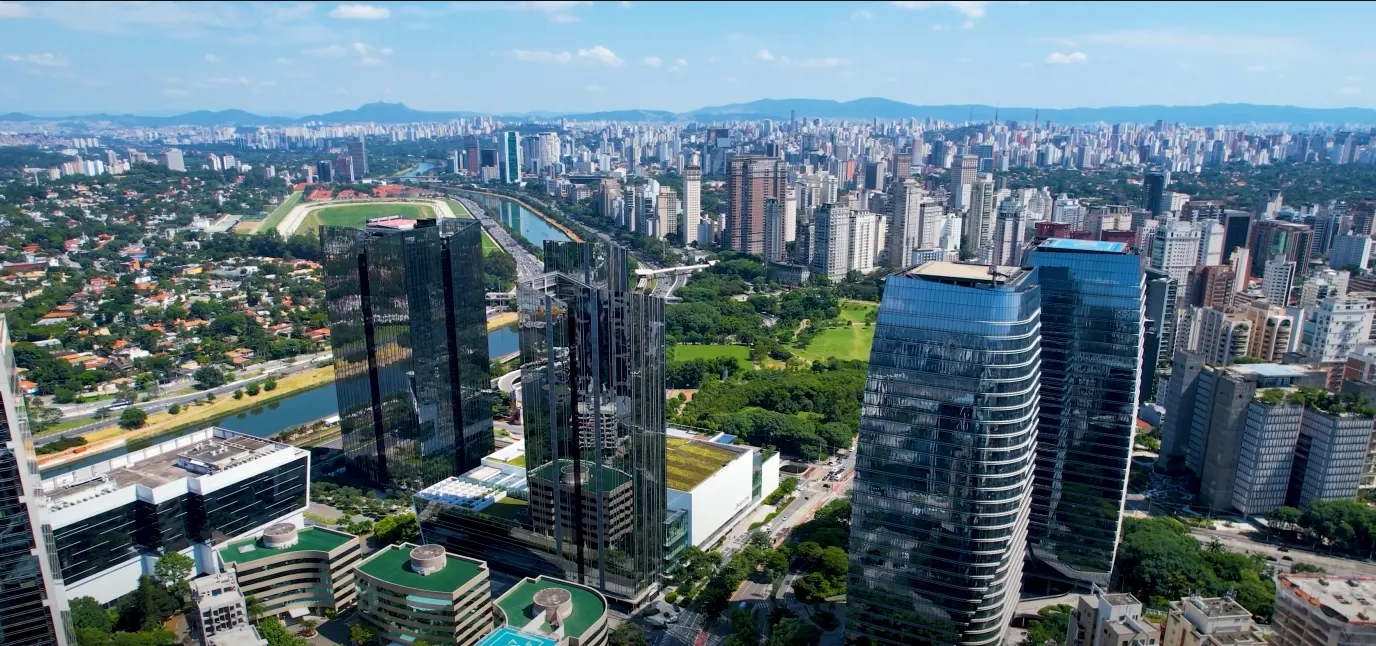
Photo by Agent010 via Wikimedia Commons, CC BY-SA 4.0
Brazil › Sao Paulo › Races
Corrida Internacional de São Silvestre
15K in Sao Paulo, normally held in December. A hilly half marathon course — Run on New Year's Eve since 1925; a hard climb up Avenida Brigadeiro Luís Antônio.
The Corrida Internacional de São Silvestre at a glance
| Distances | 15K |
|---|---|
| Main distance | 15 km (half marathon) |
| Usually held | December |
| Course | Hilly |
| City | Sao Paulo, Brazil |
| Typical conditions | 26.8°C high / 17.9°C low, rain on ~68% of days |
Run on New Year's Eve since 1925; a hard climb up Avenida Brigadeiro Luís Antônio.
Entering the Corrida Internacional de São Silvestre
Entry fees, closing dates and start times are set by the organiser and change every year, so they are not reproduced here — a stale deadline is worse than none. The organiser’s own site and its social channels are the authoritative source for the current year, and are where entry opens.
What is stable, and what this page covers: the month the race is held, what the course is like, the conditions you should expect, and how long a build-up the distance needs.
Weather at previous Corrida Internacional de São Silvestre races
Across the last ten years, Sao Paulo in December has averaged a daily high of 26.8°C and a low of 17.9°C, with at least a millimetre of rain on about 68% of days.
These are recorded observations for the race month averaged over ten years, not a forecast and not a single past race day — race dates move, so one day’s figures would mislead. Source: Open-Meteo historical archive.
How to prepare for the Corrida Internacional de São Silvestre
How long to train
Build for 12 to 14 weeks from a base you already hold rather than from nothing. For half marathon the block should peak at a longest run of 18–20 km, reached at least two weeks before race day so there is time to taper. Ten days of reduced volume is enough of a taper at this distance; keep one short session at race pace in the final week.
Training for this course
There is real climbing here, so train the descents as much as the climbs. Downhill running is what wrecks quads late in a race, and the only protection is having done it in training. Add one hilly long run a week and expect to be 20–40 seconds per kilometre slower than your flat pace for the same effort.
Conditions in December
Conditions are usually good for racing: highs average 26.8°C and lows 17.9°C in December, which is close to ideal for half marathon running. Dress for the temperature about ten degrees warmer than it actually is, since you will warm up within two kilometres. Rain is common — around 68% of days that month see at least a millimetre — so do some training runs wet and know which kit does not chafe.
Fuelling
A half marathon needs one gel or its equivalent around the hour mark for most runners, and a normal breakfast two to three hours before the start. Practise the same timing in at least three long runs so race morning is a repeat, not an experiment.
Race week
Sleep matters most two nights before, not the night before, so protect that one. Keep eating normally with a modest tilt toward carbohydrate, lay out kit the night before, and do nothing new: no new shoes, no new breakfast, no new socks. Plan to arrive at the start with time to spare — half marathon fields move slowly through bag drop and security.
Distances and where the race is run
- 15K — 15 km
The pin marks Sao Paulo city centre, the area the Corrida Internacional de São Silvestre starts and finishes in. This is not the course line: the route is set by the organiser and changes between editions, so the official course map for the current year is theirs to publish. The routes below are for training on the same roads.
Train on these roads: 10K routes in Sao Paulo · long runs in Sao Paulo · GPS art routes
Other races in Sao Paulo
- Maratona Internacional de São Paulo — Marathon, April